Alfred Burke Age, Net Worth, Family, Career ,height and weight 2026
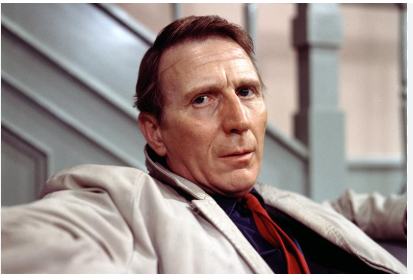
Alfred Burke was born in February 28, 1919 not only a face in British television, but that type of actor whose silent strength lingered as long as the curtain fell. Burke was born in Peckham, London in 1919 to a humble background and his birth is followed by a rise to the role of a respected character actor that is loved by millions.
He starred in the television series Public Eye as the world-weary private detective Frank Marker and his deep, calm presence made the role. Throughout his more than fifty-year career, Burke made appearances both on stage, screen, and screen and was distinguished by a dignified, gritty, and subtle performance.
This paper discusses the life of Alfred Burke: his personality, his development into his profession, his key contribution, and his legacy. We will also discuss along the way how he helped form the concept of the so-called anti-hero detective television character and why his work is relevant today.
Biography
| Category | Details |
|---|---|
| Full Name | Alfred Burke |
| Date of Birth | 28 February 1918 |
| Place of Birth | Peckham, London, England |
| Date of Death | 16 February 2011 |
| Place of Death | London, England |
| Age at Death | 92 (12 days before 93rd birthday) |
| Nationality | British |
| Profession | Actor (Stage, Film, Television) |
| Years Active | 1939–2002 |
| Education | Leo Street Boys’ School; Walworth Central School; Morley College; Royal Academy of Dramatic Art (RADA) |
| Notable Role | Frank Marker in Public Eye (1965–1975) |
| Famous Film Role | Professor Armando Dippet in Harry Potter and the Chamber of Secrets (2002) |
| Other Notable Films | Bitter Victory (1957); The Angry Silence (1960); Children of the Damned (1964) |
| Theatre Associations | Young Vic; Old Vic; Birmingham Rep; Royal Shakespeare Company; National Theatre |
| War Service | Conscientious objector during WWII |
| Spouse | Barbara Bonelle |
| Children | Two sets of twins: Jacob & Harriet; Kelly & Louisa |
| Partner (Later Life) | Hedi Argent |
| Awards / Recognition | BAFTA nomination for Best Actor (Public Eye) |
| Known For | Understated performances; redefining the television detective as a realistic anti-hero |
| Legacy | Influential character actor in British television and theatre |
Early Life and Background
Childhood in Peckham
Alfred Burke was born in 28 February 1918 in Peckham, a southeast London district.
He was a son of Sarah Ann O’Leary and William Burke who were Irish immigrants.
He went to Leo Street Boys School and Walworth Central School when he was at a tender age.
Early Work Experience
He dropped out of school at the age of 14 and served a few positions in the working-class: first, in a railway repair company in London, then as the steward in a club of businessmen, and a silk warehouse.
It is during this period that he found out that he loved acting in a local amateur dramatics group.
Training at RADA
Burke developed a greater interest in theatre. He went on to attend Morley College where he went on to get a scholarship to Royal Academy of Dramatic Art (RADA) in 1937 because of his performances.
His education at RADA gave him a ground to be able to have a career that spanned decades.
War Years: Conscientious Objection.
Burke enrolled as a conscientious objector when World War II broke out.
>Instead of service in the army, he was sent to the farm.
>This choice revealed very early his sense of moral belief and uniqueness these qualities were to form his life and his performance.
Rise to Acting Career
First Steps in Theatre
Burke entered the professional stage life in the year 1939 at Barn theatre in Shere, Surrey.
>He was then taken on tour with the Arts Council (then The Council of the Encouragement of Music and the Arts) bringing theatre to regional audiences, after the war.
Early Theatre Work
Later on, in the late 1940s, he played with both the Young and the Old Vic acting in a wide range of roles.
>In 1950, he took part in the play of Pablo Picasso Desire Caught by the Tail in the Watergate Theatre in London.
He was also a member of the Birmingham Repertory Theatre between the year 1950 and 1953.
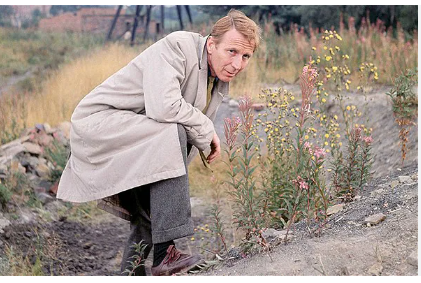
Making It on Stage
By mid 1950s, Burke had earned a good reputation on the stage. He also starred in Pirandello Henry IV in the Edinburgh Festival in 1970 and acted in Royal Shakespeare Company performances in subsequent years.
He also performed in other plays by Strindberg, including The Father.
Innovation: Public Eye and the Role of Frank Marker.
What Is Public Eye?
Public Eye was a British TV programe and aired between the year 1965 and the year 1975.
>Burke played an unglamorous role of a modest enquiry man, a private detective by the name of Frank Marker.
>The television series made Marker a down-to-earth, gritty protagonist: he leads a humble life, frequently finds it hard to earn a living, and accepts jobs which other more glamorous detectives would shun.
Why Marker Mattered
Frank Marker is regarded by numerous people as a predecessor of the anti-hero detective.
>He was not wealthy, he did not possess glitzy equipment, and he could work in a gloomy attic room.
>Tall and lean, his presence was saturnine, Burke was the ideal typecast: his voice, his glance, his hedonistic play made Marker thoroughly convincing.
The name of the main character, Frank Marker (initially it was to be Marvin), was proposed by Burke himself.
Recognition for Public Eye
Burke was nominated by BAFTA as the best actor in Public Eye.
Marker was chosen as the most compulsive male character in a poll of TV-Times.
The series lasted seven seasons with 87 episodes, hence making the show a TV institution during its period.
Beyond Public Eye Filmmaking and Television Career.
Frank Marker was just one of the roles that Alfred Burke played to perfection. He created a great career in numerous genres.
Selected Film Roles
The following is a table summarizing some of the best film appearances of Burke:
Understated Power
Burke was not an obnoxious star, but a character actor. His power was in breadth, in nuances and in sentimentality.
>He was able to depict villains at the beginning of his career but his character as Marker demonstrated his ability to create more sympathetic and complicated parts.
Moral Integrity
His professional integrity was reflected in his life: his conscience objector years, his aspiration to tours in the theatre and a down-to-earth attitude towards the fame all testify to the fact that he was not interested simply in being in the limelight.
>At one point, he said that his career had never taken off, he had low expectations and that any success would serve as a bonus.
The Private Detective Archetype is affected by factors such as gender, power, authority, and age.<|human|>Gender, power, authority, and age are the factors which influence the Private Detective Archetype.
Frank Marker and his character also made it possible to reinvent the way detectives should be depicted on TV.
Marker was not glamorous.
He had a hard time with his life and career and is relatable.
It was a performance that led later to anti-hero detectives on the British TV, and series such as Hazell and Shoestring were influenced by it.
Long Life of Theatre and Respect.
Burke continued to be active in theatre even in old age:
It was during his late 60s that he joined Royal Shakespeare Company and remained there almost 20 years.
He had sung in Oedipus with the National Theatre at the age of 90.
His extensive career demonstrates his strong interest in the art rather than fame.
Personal Life
Family
Burke had a marriage life with Barbara Bonelle who was an actress.
The two bore two sets of twins, Jacob and Harriet; Kelly and Louisa.
In his adulthood, he cohabited with his partner Hedi Argent over 25 years.
Later Years and Death
On 16 February 2011 (only a few days before his 93rd birthday), Alfred Burke passed away of a chest infection.
He was burnt in the Golders Green Crematorium.
He had children, his partner and grandchildren at his death.
Awards and Recognition
Burke did not happen to be an award-seeking glitzy, but he did get some of the significant recognition:
Nominated by BAFTA in the category of Best Actor in his part in Public Eye.
His depiction of Marker in his low-key style despite being in the spotlight was given one of the most interesting characters on TV in popular polls.
He had gained respect in the field of stage and screen acting and played in heavyweight companies such as the Royal Shakespeare Company.
Challenges and Triumphs
Challenges
Typecasting Risk: Being a character actor, Burke risked being pigeonholed but he always would defy that box through playing completely different characters.
Limited Stardom: He was a mainstream non-celebrity who appeared to enjoy his own skin.
Physical Requirements: The labor involved in working on the stage, screen and television throughout decades can be exhausting, yet he continued his profession well into old age.
Triumphs
Ionic Role: Frank Marker continues to be an icon in the history of television detective.
Respect and Longevity: A career that spanned over 50 years, and is still continuing in his 70s, 80s and even 90s.
Theatrical Mastery: The experience in working with the RSC and at the National Theatre led to his recognition as a serious actor on the stage.
Personal Integrity: The reputation he left behind after the acting world was his uprightness in WWII and his deliberate way of acting.
Impact and Legacy
The legacy of Alfred Burke is comprehensible in several ways. The following are some of the main ways how he still matters:
The Effect of Culture on Television Investigators.
He contributed towards reinventing the figure of a detective in British drama: not a glamorous, not a wealthy, but a very human one.
His Public Eye inspired subsequent TV characters and series to have more realistic, disturbed, or ethically gray detectives.
Theatre Contributions
His commitment towards theatre contributed to the British culture by his membership with Royal Shakespeare Company over a long period of time.
The fact that he could act at a later age in his life portrayed that acting is not a young game.
Pattern Setter of Artificial Righteousness.
Burke did not drop his values even in the war and on stage.
His meekness at the peak of success and the absence of the desire to become a celebrity in search of fame makes him an idol to other actors who place more emphasis on the art than the fame.
Record of Versatility
Picasso on stage, film villains, a TV detective, a Hogwarts schoolmaster, Burke did it all.
He proved that supporting actors can be as main and as famous as heroes.
Summary Table: Alfred Burke: The main facts.
>Aspect Details
Full Name Alfred Burke
Born 28 February 1919, Peckham, London.
>Died 16 February 2011, Barnes, London
Education Leo Street Boys School; Walworth central school; Morley college and RADA.
>Key Performance Frank Marker in Public Eye (196575)
Last Film Appearance Professor Armando Dippet in Harry Potter and the Chamber of Secrets (2002)
Personal Life Married, with two sets of twins, to Barbara Bonelle; subsequently with Hedi Argent.
Significant Characteristics Conscientious objector, character player, theatre star, low profile.
Conclusion
Alfred Burke was a committed, an upright, and a profound person. Instead, he had a simple background in Peckham and by sheer effort and enthusiasm, he rose to being one of the most admired actors in Britain. His performance as Frank Marker in Public Eye is still iconic: he was a detective, who was vulnerable and real, and morally sound. Burke did not have a pen flair hero, but he made believable characters who bore the burden of the world in their voice and appearance.
In addition to television, his strong interest in theatre particularly in the Royal Shakespeare Company was a sign of his passion in the art. He is still acting, still dedicated, still faithful to himself even in his 90s.
Alfred Burke demonstrates us that being successful does not necessarily mean being famous. At times it is just living a purposeful life and making important decisions and committing yourself to that which you love. His legacy is not only in the stored archives of Public Eye, but in numerous actors and viewers who got to know his strength by grace.
FAQs
Who was Alfred Burke?
>>>>>>>>>Alfred Burke was a English actor who was born in 1918 at Peckham, London and is remembered as the star of the TV series Public Eye, a role of a private detective named Frank Marker.
What was his most famous role?
>>>>>>>>>This is his most well-known part, having played Frank Marker in Public Eye, which ran between 1965 and 1975 and left him a household name in the British television.
Did Alfred Burke act in films?
>>>>>>>>>Yes- In a long career he has appeared in numerous movies, such as The Angry Silence, Bitter Victory, Children of the Damned and portrayed Professor Armando Dippet in Harry Potter and the Chamber of Secrets.
What was his theatrical experience?
>>>>>>>>>Burke was educated at RADA, but worked in the Young Vic and Old Vic, served many years in the Royal Shakespeare company and even appeared in the National Theatre in his 90s.
When and what was the reason Alfred Burke died?
His death occurred on 16 February 2011 because of a chest infection.